There is a moment — usually less than ten seconds — where a potential customer decides whether your business feels trustworthy or not.
It doesn’t happen consciously. It’s automatic.
They search for your service. Your name appears. They click. And within seconds, their brain scans for what psychologists call credibility cues.
In digital marketing, we call these digital trust signals.
This is why building trust online has become more important than advertising itself.
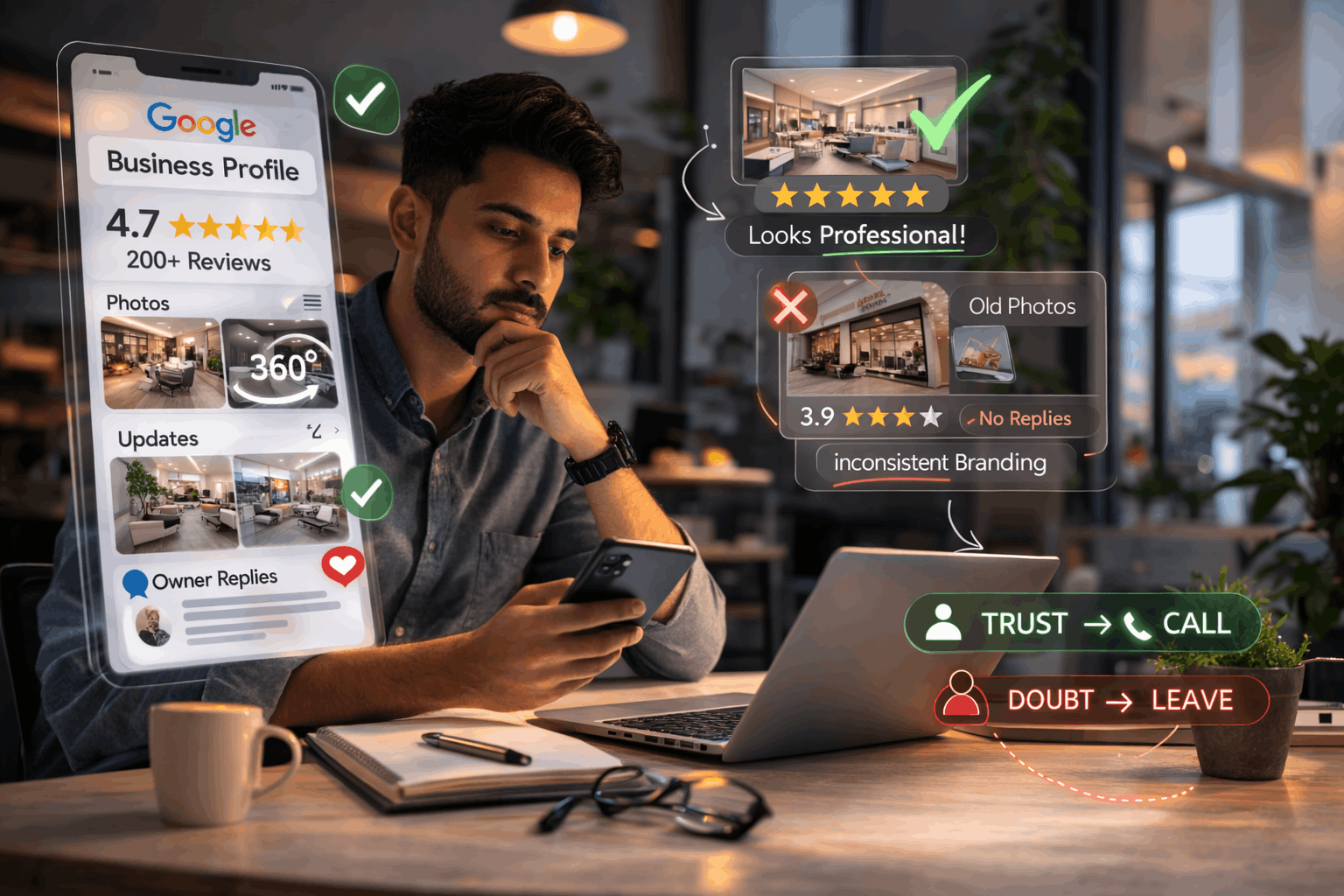
When someone lands on your Google Business Profile, they are not reading every detail. They are scanning. Is the rating above 4.3? Are the reviews recent? Do the photos look real? Is the location clear? Is the information updated?
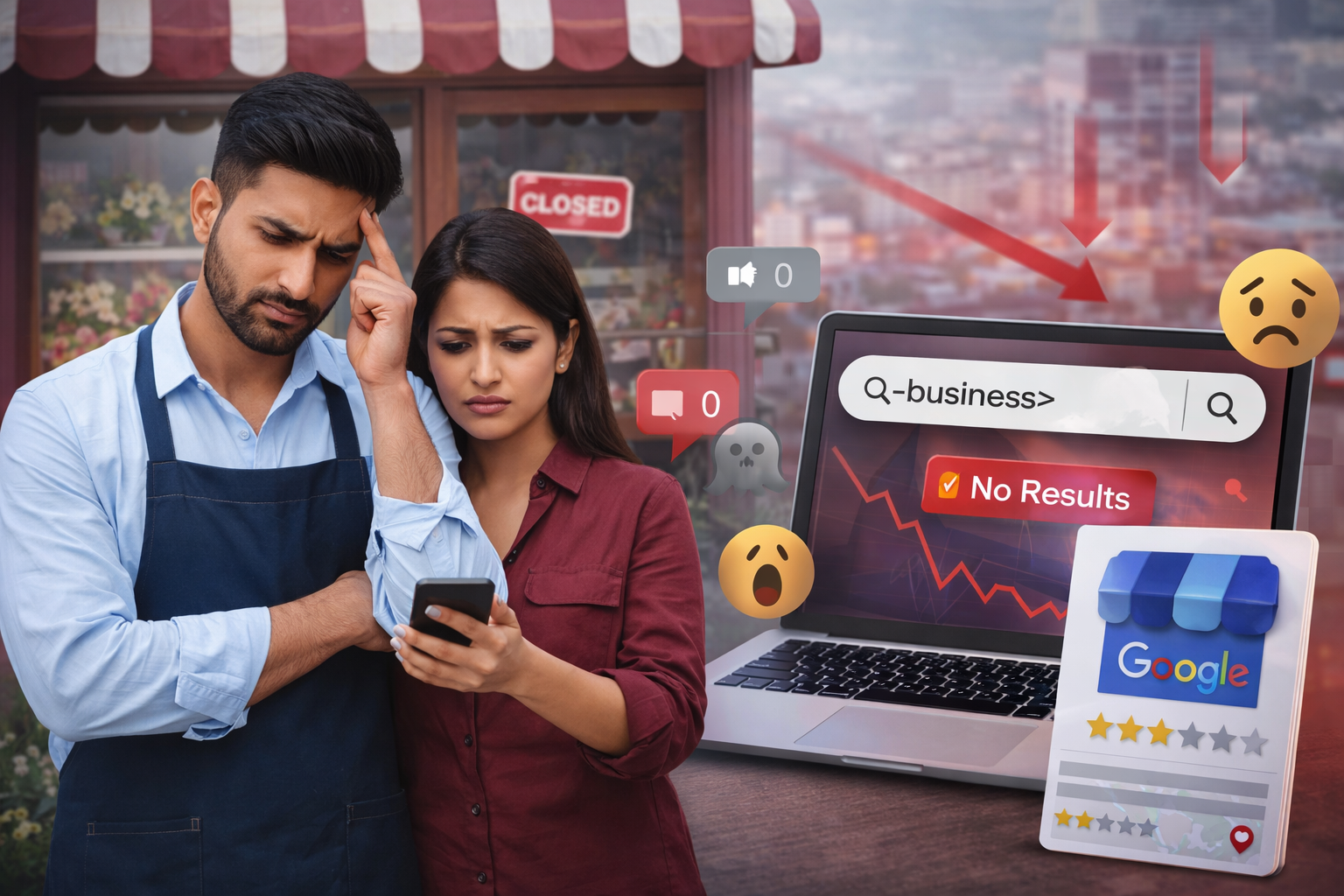
If something feels outdated or inconsistent, doubt begins.
And doubt kills enquiries.
A well-known case often discussed in branding podcasts like The Diary of a CEO and Marketing School with Neil Patel is how consumers don’t buy products — they buy certainty. Big brands understand this deeply.
Look at Apple.
Before you buy an iPhone, you already trust it. Why?
Consistency. Clean design. Professional visuals. Social proof. Retail experience. Website clarity. Reviews everywhere.
That’s not accidental. That’s reputation engineering.
Now apply this to local businesses in India.
If a clinic in Pune has:
• 4.7 rating
• 200+ reviews
• Clean 360° photos
• Updated posts
• Professional images
And another clinic has:
• 3.9 rating
• Old photos
• No owner replies
• Inconsistent branding
Which one feels safer?
Even if both doctors are equally skilled.
Trust is perception before experience.
According to behavioural psychology studies from Stanford Web Credibility Research, users judge business credibility primarily based on visual design and online presence before content depth.
That means:
Your Google profile is not just a listing.
Your Instagram is not just posts.
Your YouTube is not just videos.
They are signals.
Another example — Airbnb.
Airbnb’s early success was not because they had more houses than hotels. It was because they invested heavily in professional photography. When listings improved visually, bookings increased dramatically.
Photos changed trust.
The same principle applies to:
• 360° Virtual Tours
• Google Business optimisation
• Structured social media presence
Online reputation management in India is no longer about “looking active.” It’s about removing doubt.
When customers feel:
“This looks professional.”
“This feels real.”
“Others trust them.”
They move to action.
Trust reduces friction.
And marketing, at its core, is friction removal.
If you want to increase business credibility, the question is simple:
When someone checks you online today — does your presence remove doubt or create it?
Because in 10 seconds, the decision is already made.